AI Customer Service on WhatsApp in 2026: What Changed in the Rules and Pricing
WhatsApp is the region's top channel for talking to customers, and 2026 brought important changes to its pricing and to the rules for AI on the platform. Here's what to know before you build AI-powered support.
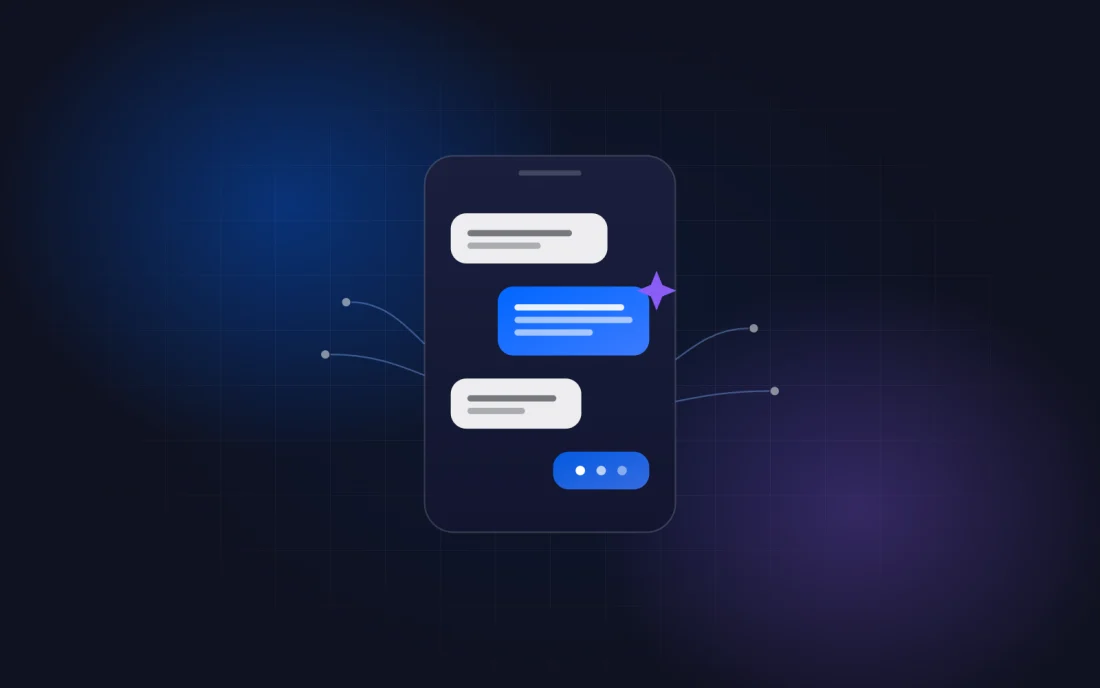
In Egypt and most of the Arab world, WhatsApp is where customers expect to find you. They ask about prices, follow up on orders and complain, all in one chat. That's why so many businesses use AI to answer customers on WhatsApp. But 2026 brought important changes to both the pricing of the WhatsApp Business Platform and the rules for using AI on it, and they're worth knowing before you build or upgrade your setup.
First: pricing changed twice
From conversations to messages
Since July 1, 2025, Meta charges for WhatsApp Business per delivered message, instead of per conversation as before. Prices vary by message category (marketing, utility or authentication) and by the recipient's country.
The end of fully free service messages
Since November 2024, customer service messages, meaning replies sent within the 24-hour window after a customer messages you, had been completely free. That changed on October 1, 2026:
- Meta resumed charging for service messages on a per-message basis.
- Each business phone number now gets 1,000 free service messages a month, and unused messages don't roll over.
- Utility templates sent in reply to a customer inside the service window, which had been free since July 2025, are now charged too.
- Meta advises businesses to add a payment method in Billing Hub so service messages keep flowing.
What this means in practice: a small business sending fewer than 1,000 replies a month won't feel much difference. A business whose automated system answers thousands of chats now needs to account for the cost of every reply. Conversation design starts to matter: fewer, clearer replies instead of a long string of short messages.
The ad window
Chats that start from Click-to-WhatsApp ads open what Meta calls a free entry point window, which can stay open for up to 7 days.
Second: what AI is allowed to do on WhatsApp
In October 2025, Meta announced a policy barring general-purpose AI providers, companies whose core product is a general AI assistant such as ChatGPT or Perplexity, from the WhatsApp Business Platform. It applied to new users from October 2025 and to everyone from January 2026.
The key point: businesses that use AI to serve their own customers, for example answering questions, booking appointments or tracking orders, are not affected. Your shop, clinic or real estate company can use an AI assistant to answer its customers.
The policy met regulatory pushback in Europe and Brazil. In June 2026 the European Commission ordered interim measures restoring rival chatbots' access to WhatsApp, and Meta said it would appeal. These developments mainly concern general-purpose assistant providers, not businesses serving their own customers.
Meta enters the game itself
Since July 2026, Meta has added a new pricing category, Meta Business Agent, for messages generated by its own AI agent for businesses, at a flat $2 per million tokens. Businesses now have two paths: Meta's built-in agent, or an independent solution they fully control.
How to build AI customer service on WhatsApp
- Start with the most frequent questions. Most businesses get the same questions again and again: prices, hours, order status, location. That's the best place to start.
- Connect replies to real data. An assistant that reads the actual order status from your system is far more useful than one that sends generic text.
- Make handover to a person easy and obvious. When the assistant doesn't know, or the customer asks for a human, the chat should move to an agent immediately, with full context.
- Let staff review where it matters. For sensitive cases, the AI can draft a reply that an agent approves before it's sent.
- Watch costs after the October change. Track service messages each month and design replies to be complete in the first message.
- Mind Arabic and its dialects. Global models have improved a lot in Arabic, but research still shows weaker performance on dialects than on Modern Standard Arabic or English. Test the assistant on real customer conversations before launch.
- Respect customer data. In Egypt, the Personal Data Protection Law comes fully into force on November 1, 2026, when the one-year compliance period ends, and it requires specific licences for direct electronic marketing and for transferring data outside the country.
The bottom line
WhatsApp is still the strongest customer service channel in the region, and AI on it is allowed and useful for any business serving its own customers. But service messages have carried a cost again since October 2026, so good conversation design now saves real money, not just customers' time.
At CODE NUTS we built SadaBot: one inbox for WhatsApp, Messenger, Instagram and more, with an AI assistant that replies on its own or after your team approves. Learn about SadaBot.
Sources
- Meta: WhatsApp Business Platform pricing
- respond.io: WhatsApp pricing change 2026
- respond.io: WhatsApp general-purpose chatbot ban
- TechCrunch: Meta will allow rival AI chatbots on WhatsApp in Europe, for a fee
- News4Jax: EU orders Meta to restore WhatsApp access for rival AI chatbots
- DialectalArabicMMLU: model performance on Arabic dialects
- CMS: Egypt's PDPL executive regulations
Last updated: October 20, 2026. Meta's prices and policies change, so check the official pricing page before making decisions.